"At a Crossroads Is Probably an Understatement": What the Data Says About Aged Care Capacity in 2027
"Our hospitals are full, residential care is full, and there's 200,000 people waiting on our home care package... 'at a crossroads' is probably an understatement." That's Josh McFarlane, CEO of Catholic Healthcare, describing the same convergence of pressures showing up right across the State of Industry Report survey — but from inside a sector managing acute demand growth directly.
The numbers back him up. KPMG's 2026 analysis of the aged care market found government expenditure reached $39.2 billion in FY25, up 9.6% on the year before — and 96,709 people were still on waiting lists for appropriately matched Home Care Packages, a 41% increase on the previous year. More funding hasn't closed the gap on its own.
The same survey that captured this pressure also found something less obvious: workforce and staffing investment priorities look completely different depending on who you ask. Direct care providers — including aged care — prioritise workforce and staffing three times more often than AI and automation (34.4% versus 19.4%). Technology and vendor organisations run the exact opposite pattern. That's not a contradiction. It's specialisation, and it only works if the specialised parts are actively coordinated.
Brett Reedman, CIO at Catholic Healthcare, made the same point from the inside: implementation capability, not technology selection, decides whether AI investment helps. His organisation's approach has deliberately started small — testing a handful of use cases, dropping the ones where the underlying data wasn't sustainable, and building out gradually rather than attempting scale from day one. "AI is data. If your data isn't good quality — garbage in, garbage out."
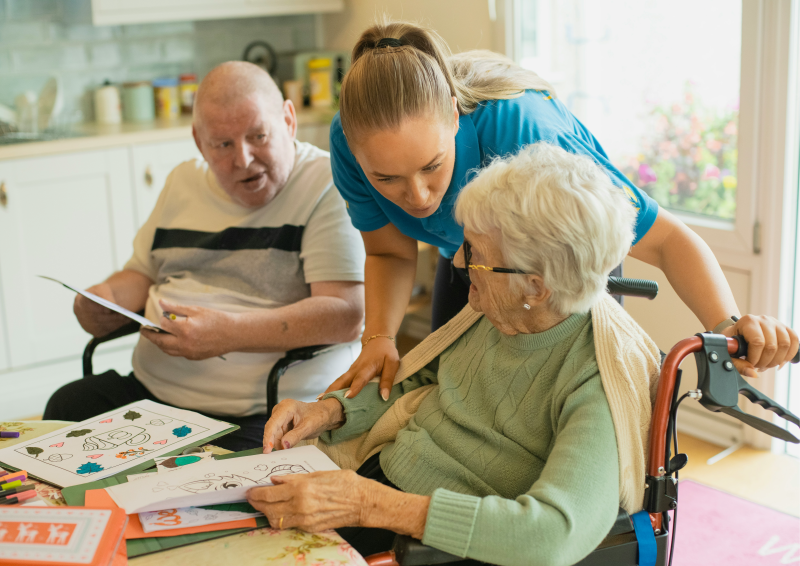
Where the sector is showing what's possible is in care model redesign that doesn't wait for a bigger budget. Catholic Healthcare is halfway through a three-year redesign it calls its "in spirit" model of care, built around one question: what matters to the resident, not what the institution's existing processes require. Residents wake when they choose instead of to a fixed schedule. Buffet dining has replaced set mealtimes. Frontline roles have shifted from narrow, task-specific positions into a generalist model built around a neighbourhood of residents. McFarlane was careful to note technology played only a small supporting role — the transformation itself was cultural and structural.
Read the full State of Industry Report